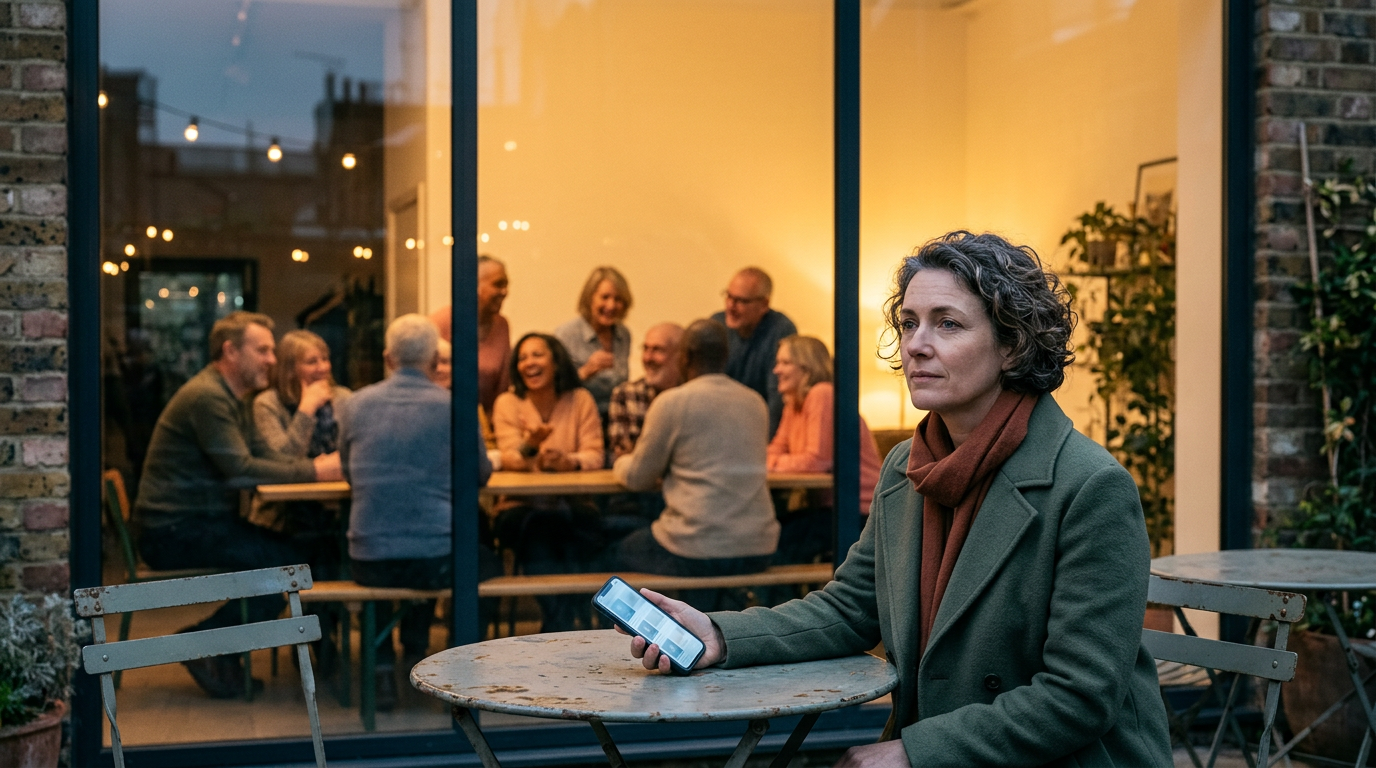
What if the problem is not that there are no good men or women left?
What if the problem is that modern dating has quietly trained us to reject real people before we ever get the chance to know them?
And what if the thing we blame most, dating apps, is not actually the original problem at all?
That last question is the uncomfortable one.
Because it is easier to blame the app. It is easy to blame unrealistic standards, emotionally unavailable men, picky women, social media, divorce, bad luck, or the fact that everyone in your town seems to be either married or holding a fish in their profile picture.
But The Real Reason Dating Is Broken, a recent video essay by Max Fisher, makes a more provocative case. Dating did not collapse simply because we got worse at picking partners. It became miserable because the social world that once made connection possible has been disappearing underneath us.
At the same time, many people are still trying to date with relationship expectations designed for a world that no longer exists.
That combination is brutal. And it explains why so many midlife singles feel like they are doing everything they were told to do, only to discover that the old instructions do not work in the new terrain.
The Dating App Is Not the Whole Crime Scene
The obvious story is that apps ruined dating. There is some truth in that. Apps can turn people into profiles, keep us endlessly comparing, and make a normal human interaction feel like a product search with bad lighting.
But Fisher points out that the dating downturn started before the apps took over. Young people were already dating less. More adults were living alone. Fewer people were having relationships, building families, or even spending regular time in the kinds of social settings where romance used to start.
That matters because it shifts the question.
The question is not just, “Why are apps so terrible?”
It is, “Why did we need to hand the entire job of meeting people to apps in the first place?”
We did it because the places where people once met naturally have thinned out. Fewer casual dinners. Fewer standing invitations. Fewer friends-of-friends. Less time around coworkers outside work. Fewer regular communities where you see the same people often enough for comfort, curiosity, and attraction to develop.
When every potential partner is a stranger on a screen, dating becomes a high-stakes evaluation. You are not building familiarity. You are trying to make a major decision from six photographs, three prompts, and whether someone used the word “adventure” too many times.
No wonder it feels exhausting.
The Real Problem Is Not Loneliness. It Is a Life With No Room for People.
There is an important difference between loneliness and isolation.
Loneliness is the ache of wanting more connection. Isolation is the pattern of living in ways that make connection less likely to happen.
We have become astonishingly efficient at isolation. We work from home. We order in. We stream alone. We scroll instead of calling. We use our free hours recovering from the day rather than participating in a life that puts us in contact with other humans.
None of this is a moral failure. Most of it is understandable. People are tired. They are busy. Midlife is full. There are children, work obligations, aging parents, financial pressure, and sometimes a divorce that rearranged everything.
But dating cannot thrive in a life with no social ecosystem.
You cannot create a rich romantic life entirely from fifteen-minute phone checks between meetings. You cannot expect an app to replace friendship, community, shared activity, ordinary conversation, and the little repeated encounters that make someone feel less like a risk and more like a person.
This is why “just put yourself out there” is such lazy advice. People do not need more pressure. They need more places to be seen over time.
The better question is not, “Where can I find a date?”
It is, “What kind of life would make meeting people feel normal again?”
That is a more useful question. It is also a more hopeful one.
Infinite Choice Turns Us Into Professional Rejectors
Here is the part that should make all of us pause.
When apps offer unlimited options, our brains stop evaluating people on their own merits. We shift into filtering mode.
We look for reasons to eliminate.
Too short. Too far away. Too polished. Not polished enough. Wrong photo. Weird answer. Too eager. Not eager enough. Has children. Does not have children. Went to the wrong college. Likes pickleball too much. Says “fur baby.”
Some filters are wise. Values, safety, life stage, character, and basic attraction matter. But endless choice creates a different problem: it makes every person feel like a preliminary draft of someone better who may appear after one more swipe.
The result is not discernment. It is permanent dissatisfaction.
Fisher calls this a version of the “Zillow effect.” When there are thousands of options, you do not relax into deciding. You keep searching. You become more focused on avoiding an imperfect choice than recognizing a potentially good one.
That does not make people shallow. It makes them overwhelmed.
And overwhelmed people rarely become curious. They become cautious, dismissive, and tired.
For midlife singles, this can be especially painful. You are not choosing a casual date for Saturday night. You may be deciding whether to make room in a complicated, hard-won life. So every profile starts to feel like it must clear an impossible bar.
But nobody can compete with an imaginary person who has not yet disappointed you.
Women Did Not Become Too Independent. The Deal Changed.
The video makes another point that will frustrate anyone looking for a simple villain.
Women are not stepping back from dating because they suddenly stopped wanting love. Many are stepping back because the old relationship bargain no longer makes sense to them.
For generations, marriage was closely tied to financial security, social acceptance, and a prescribed role for women. As women gained more access to education, income, and independent lives, marriage stopped being the only pathway to stability.
That is not an attack on marriage. It is a change in the conditions under which people enter it.
The question has become sharper: if both people work, both people have ambitions, and both people want a full life, what exactly is the partnership going to look like day to day?
If the unspoken answer is that one person brings in income, manages the home, carries the planning, absorbs the emotional weather, and makes everyone else’s life run smoothly, while the other person calls himself “traditional,” it should not surprise anyone that the offer is not landing.
Men are not the enemy here. But many men were taught a version of adulthood that centered on provision and loyalty while leaving them underprepared for the invisible work of partnership: noticing, planning, initiating repair, sharing domestic responsibility, and staying emotionally engaged.
The divorce video we reviewed earlier makes a narrower supporting point worth keeping: the language people use in relationship conflict matters. When ordinary frustrations get inflated into moral verdicts or clinical labels, conversation shuts down. When people cannot say, “I am overwhelmed,” “I need more help,” or “I feel alone in this,” they often end up arguing about character instead of solving a problem.
That is not a divorce argument. It is a dating argument too.
The new relationship bargain cannot be built on resentment, scorekeeping, or vague expectations. It has to be spoken out loud.
The Most Attractive Thing You Can Offer Is Not a Better Profile
Fisher lands on a surprisingly unglamorous answer to the dating crisis.
Socialize more in person. Build relationships through real life. Make partnership more equal. Stop expecting old gender roles to carry a modern relationship.
That is not flashy advice. It will not fit on a bumper sticker. It is still probably right.
For men, this is not a call to become a different species or memorize a new set of rules designed to make you acceptable. It is a call to become more capable. Build friendships. Learn to host, plan, clean up, listen, follow through, and notice what needs doing without waiting to be assigned a task. Those are not tricks. They are signs that you can build a life with someone.
For women, this is not a call to lower standards or pretend attraction does not matter. It is an invitation to distinguish between true incompatibility and the reflex to keep filtering. A good person may not arrive with perfect timing, perfect chemistry, perfect wording, and a perfectly optimized profile. They may arrive as someone you get to know slowly.
For everyone, the move is the same: create more real-world contact than your app can provide.
Join the group. Take the class. Go to the event twice, not once. Invite people over. Become a regular. Let friendships count as part of your dating life, not as a consolation prize for not dating.
Because here is the twist: the most promising relationships increasingly begin before anyone calls them dating.
They begin as familiarity. Shared jokes. A conversation that continues after the event ends. A person you see enough times to notice their steadiness. A friend you suddenly realize you trust.
That may feel less efficient than swiping.
It is also much more human.
So, Is Dating Broken?
Yes, in some important ways.
It is broken when we expect technology to replace community. It is broken when unlimited choice teaches us to see people mainly as disqualifications. It is broken when men and women keep arguing about an old deal that neither side actually wants to live under. It is broken when we build lives so isolated that a romantic partner is expected to provide all of our novelty, belonging, friendship, and emotional oxygen.
But broken is not the same as hopeless.
The answer is not to become more cynical. It is not to return to rules that made people perform a life instead of honestly choosing one. It is not to wait for an app update that finally delivers a fully vetted soulmate to your door.
The answer is more demanding and more alive.
Build a life people can enter. Learn the skills that make partnership feel lighter, safer, and more mutual. Let someone be a real person before deciding whether they are your future. And spend enough time in the world that love has a chance to find you there.
The biggest question is not whether there are still good people to date.
It is whether we are willing to build a culture, and a personal life, where good people can actually meet.
Source note: This editorial is primarily based on video, The Real Reason Dating Is Broken by Max Fisher. Divorce: Why the System Is Failing Men by Kait Willett is referenced only in support of the article’s point about the language used during relationship conflict. The interpretations and recommendations are those of Unchaperoned Life.