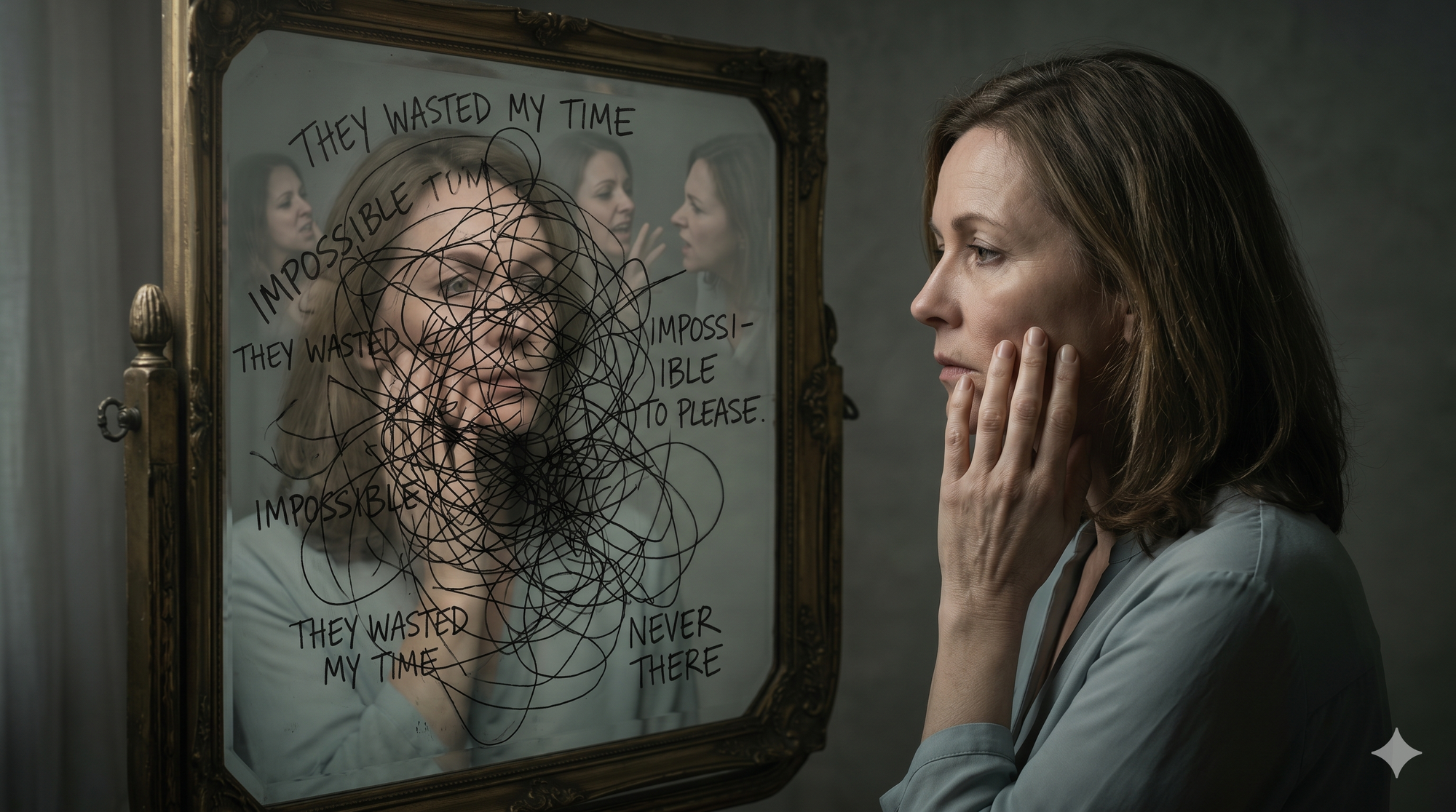
We have been working through an episode of Modern Wisdom that we cannot stop recommending. Nir Eyal, the behavioral researcher behind the new book Beyond Belief, sat down with host Chris Williamson for episode 1074 to walk through the science of how beliefs form, how they shape everything we do, and how to change the ones that are working against us. The episode covers a lot of territory, and the companion pieces we published alongside this column dig into two other sections of it. But this one is about a smaller, funnier, more uncomfortable story Nir told about himself and a birthday and a florist in central Florida.
He stayed up until one in the morning in Singapore arranging a flower delivery for his mother's seventy-fourth birthday. He found the right florist, checked the reviews, confirmed they could handle the Florida heat, and went to sleep feeling like he had done something genuinely thoughtful. The next morning his mother called to say thank you, then added that the flowers had arrived half dead and he really should not use that florist again. What came out of his mouth was something he says sounded like it came from a thirteen-year-old. His wife offered to help him work through it. He did not want help. He wanted to vent.
That reaction is recognizable to almost everyone reading this. And what follows in the podcast, where Nir describes what venting actually does and what it costs, is the part we wanted to write about. Because if you have been through a divorce or the end of a long faith-based relationship, you have told the story of what happened. To friends, to family members, to yourself at two in the morning, to anyone who would sit still long enough. And if you have been doing that for a year, or three, or longer, there is something worth knowing about what you have been doing to yourself in the process.
Scott and Laurie heard this and wanted to weigh in.
The Illusion That You Are Getting It Out
Laurie
The word rumination comes from what cows do to their cud. They chew the same material endlessly, cycling through it again and again. When we talk about ruminating on a problem we think we are doing something useful, because it feels like attention and attention feels like progress. It feels like eventually you will work through it and arrive somewhere different.
Nir cites the research and the finding is not what most people expect: venting does not work. It does not release the frustration or clear the emotional backlog. What it actually does is make the belief more vivid. Every time you tell the story, you rehearse it. And the brain does not distinguish well between rehearsal and experience. You are not processing what happened. You are reinforcing it.
This is not about suppressing what you feel. The grief is real. The anger is real. The bewilderment is real and it matters. What does not help is the loop. The same story told again and again to whoever will listen, not because expressing it is wrong, but because that particular pattern is making the grip tighter, not looser.
The Most Expensive Belief You Are Running
Scott
Let me be direct about something. If you have been through a divorce or the end of a serious long-term relationship, you are probably carrying a central belief about that person. It might sound like: she destroyed my family. He wasted the best years I had. She was impossible to please no matter what I did. He was never really there for any of it. They made the life I was supposed to have impossible.
These stories feel true because they are built on things that actually happened. Real events. Real betrayals or failures or disappointments that did not have to happen the way they did. The events are not in question.
But the story built on those events is a belief, not a fact. And right now that belief is costing you more than you probably realize. It is costing you energy, attention, and availability. Every person you meet while running that story is in silent competition with a ghost. And the ghost has every advantage, because the ghost never shows up unexpectedly, never says the wrong thing, never disappoints you in any new way.
The only thing the story requires is that you keep holding it. And as long as you hold it, the person who hurt you still holds the primary seat in your emotional life. That is an expensive arrangement when you are trying to build something new.
The Turnaround
Laurie
Nir describes a four-question process from Byron Katie, a framework for examining a belief you are holding about someone. He used it on his belief that his mother was too judgmental and hard to please. The four questions, briefly: Is it true? Is it absolutely true, meaning is there any other possible explanation at all? Who are you when you hold this belief? Who would you be without it?
And then comes the turnaround. You flip the belief and ask whether the opposite might hold any truth. Then you ask whether the belief might be describing you rather than the other person. Then you ask whether you might be directing toward yourself the very thing you are directing toward them.
In Nir's case, when he got to the turnaround that applied the judgment to himself, he realized he had arrived at the phone call with a script. He had already decided exactly how his mother should respond. When she deviated from that script, he lost it. The person being too judgmental and hard to please was him.
He admits that turnaround was the last one he wanted to accept. It was also, when he was honest, the most true.
This is not about letting the other person off the hook. What they did may have been genuinely harmful. The question the turnaround asks is not whether they behaved badly. It is whether your current belief about them is serving you, or whether it is simply the most expensive lease you are currently running, one that keeps renewing automatically without you ever signing the paperwork again.
A Practical Tool Worth Trying
Scott
Here is something Nir describes that sounds absurd and works surprisingly well. He schedules time to worry. He puts it in his calendar. When his brain starts ruminating on something, instead of engaging with it or fighting it, he tells himself he has a slot for this and he will think about it then.
What happens nine times out of ten is that by the time the slot arrives, the urgency has dissolved. The thing that felt enormous and inescapable at eleven at night is just another ordinary problem on Thursday afternoon.
For post-divorce rumination specifically, the version of this is setting aside real, structured time to go into the material deliberately, in writing, with a clear stopping point. You are not suppressing the feeling. You are giving it a container. The difference between processing and looping is not how much time you spend with the material. It is whether the time has a shape around it that lets you set it down again when the slot ends.
The goal is not to stop feeling it. The goal is to stop letting it run continuously in the background of everything else you are trying to build.
What Becomes Available When You Put It Down
Laurie
There is a reason this particular work matters for the conversation we have here, which is about midlife singles trying to find real, honest, lasting connection. You cannot fully meet someone new while you are still in an unfinished argument with someone old. Not really. You can go through the motions of dating. You can be physically present. But the part of you still rehearsing the story is not available for what is actually in front of you.
Nir points to research showing that we do not see people as they actually are. We see our beliefs about them, filtered through our expectations and our patterns. If you are carrying the belief that people like your ex are the kind of people you attract, or that your judgment cannot be trusted, or that the damage from what happened is still visible on you somehow, you will find evidence for all of those things in the behavior of every new person you meet. Not because it is there, but because you are looking for it.
If beliefs about your own worth and your own chances are part of what is quietly running your dating life right now, the companion piece we published on the belief inventory goes there directly. And the piece we wrote about prayer and intentional ritual is relevant here too, because releasing a story this old is not only psychological work. It is also spiritual work.
But here, for now: you do not have to resolve everything your ex did in order to move forward. You just have to decide that they no longer get the primary seat.
And when you are ready to go deeper, we will be here.
— Scott & Laurie
Weighing in from the lowest tier of the Celestial Kingdom, where we eventually figured out that the person we could not stop thinking about was almost always us.