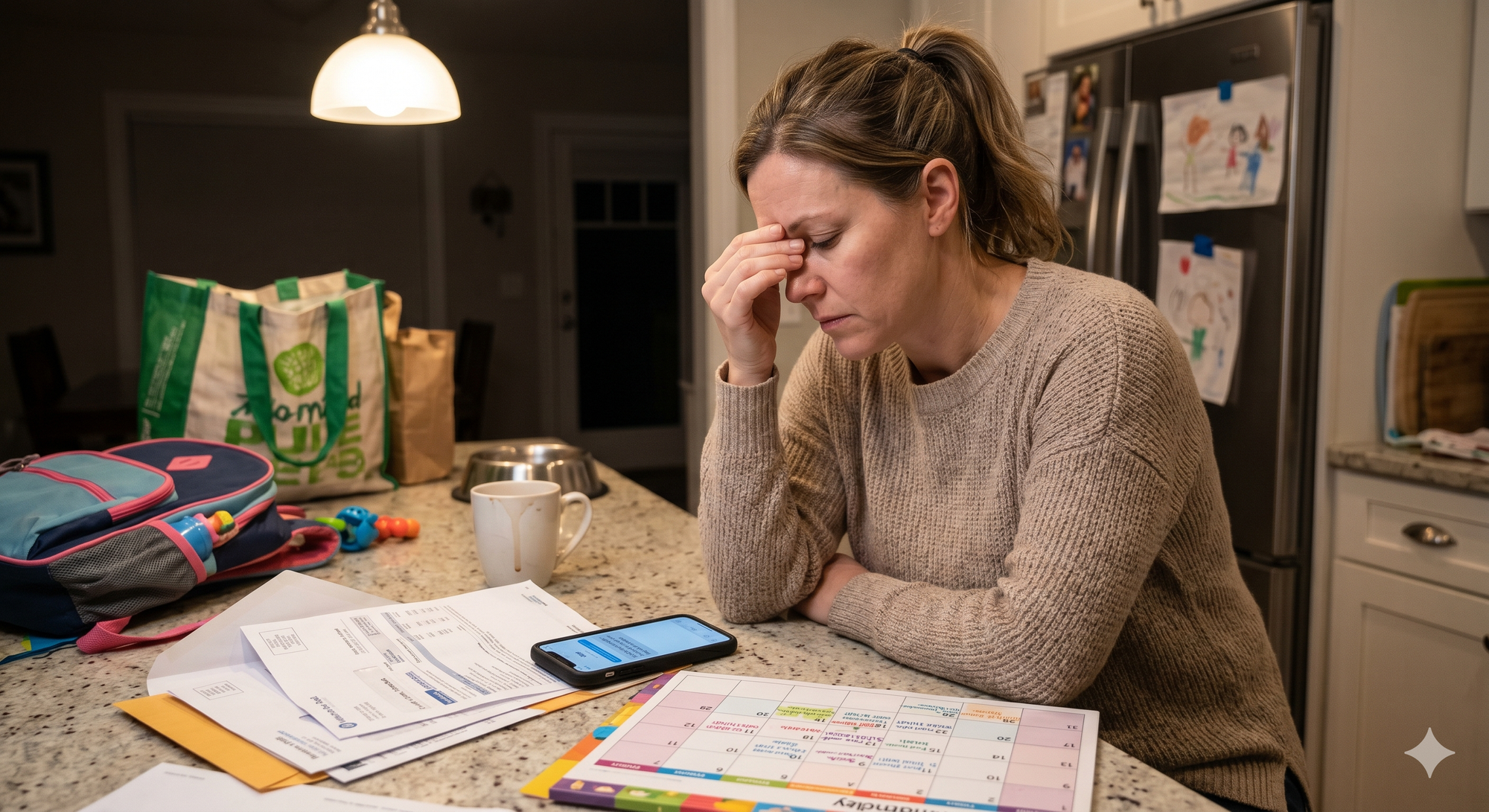
A post in the LDS Dating - Midsingles group asked a question that apparently a lot of people were already feeling but had not quite said out loud: What if you meet a nice man, he starts trying harder around date four or five, and instead of feeling excited, you realize you are just tired?
Not tired of him, exactly. Just tired. Tired from work, kids, groceries, bills, appointments, repairs, laundry, and the general background hum of everyone needing something. The original poster said she craves physical closeness and connection when she is alone, but once she gets a taste of it, the craving disappears and all she wants is peace for another six months.
The thread had over 237 comments and replies when we read it, and it split fast. Some people said, in effect, “I could have written this.” Others locked onto the intimacy part and turned the conversation into a debate over LDS standards, shame, and whether this kind of honesty belongs in an LDS dating group. A few people managed to do the very helpful thing: they stayed with the actual question.
One commenter gave the whole thread its thesis: “Exhaustion is information.” Scott and Laurie read that, looked at each other, and immediately knew we had to weigh in.
The Problem Is Not That He Is Nice
Scott
The first thing we need to say is that the nice guy is not automatically the problem.
A man can be thoughtful, generous, attentive, and still be arriving in a season where your life has no margin. That does not make him needy. It does not make you broken. It means the relationship is asking for energy you may not actually have.
But here is the part that matters: if you do not have that energy, you have to tell the truth. Not the dramatic truth. Not the disappearing truth. The plain truth. “I like you, and I am realizing I may not have the capacity for the pace this is taking.”
That sentence will save two people a lot of confusion.
Because if a good man is showing up with real interest, he deserves clarity. Not because you owe him your life. You do not. But because accepting attention while quietly resenting the emotional cost is how decent people end up hurting each other without intending to.
Exhaustion Is Information
Laurie
That phrase from the thread is the one I keep coming back to: exhaustion is information.
It is not always a verdict. It is not always your intuition saying, “Run.” Sometimes it is your body saying, “I have been operating in survival mode for so long that even tenderness feels like another demand.”
There is a real grief in that. Many midlife singles are not deciding between loneliness and romance in some clean little movie scene. They are deciding whether they have enough energy left after work, parenting, custody schedules, bills, home maintenance, faith expectations, and everyone else’s emergencies to become emotionally available to one more human being.
And yes, physical closeness can complicate this. Sometimes what you are craving is not a relationship. It is reassurance. Warmth. Touch. The feeling of being wanted. Those are real needs. They are not shameful needs. But they are not the same as readiness for partnership.
If touch temporarily quiets the ache, but closeness immediately makes you want to retreat, that is worth paying attention to. Not as proof that you are bad. As information about what kind of healing, pacing, honesty, or support you may need before you invite someone further in.
Dating With a Real Life
Scott
One of the smartest comments in the thread suggested that dating may feel exhausting because it is being kept separate from normal life. That is worth sitting with.
A lot of mid-singles are still trying to date like they are twenty-three, just with mortgages, teenagers, ex-spouses, aging parents, and a nervous system that has seen some things. The old dating script assumes time, novelty, spontaneity, and the ability to disappear into romance for a while. That is not the life many people are living.
At this stage, the green flag may not be grand gestures. It may be whether someone can enter your actual life without needing you to perform a fantasy version of yourself.
Can he understand that your child has a concert? Can she understand that your custody week is not flexible? Can he notice the sink full of dishes without acting like your life is an inconvenience? Can she tell the truth about her bandwidth instead of pretending she is available and then vanishing?
The right relationship still takes energy. Let’s not romanticize this. But a healthy one should eventually return energy too. It should bring some measure of steadiness, relief, humor, help, affection, and shared life. If it only adds obligation, then something about the person, the timing, the pacing, or the structure needs to change.
Values Without Cruelty
Laurie
The thread also revealed something tender and painful about faith-based dating spaces. Someone mentioned physical intimacy, and suddenly the conversation became less about exhaustion and more about who was allowed to speak.
We are not going to mock standards. Standards matter. Covenants matter to many people in this community. Values are part of how people decide what kind of life they want to build and what kind of partner they want to choose.
But cruelty is not a standard. Public humiliation is not discernment. And if the only way we know how to defend values is to make a vulnerable person regret being honest, then we are not actually helping anyone become more whole.
There is a better way to say hard things. You can believe sexual choices matter and still respond with dignity. You can say, “I think this may be costing you more than you realize,” without calling someone disposable. You can say, “This does not align with what I am looking for,” without making a spectacle of someone else’s struggle.
Honesty is not the enemy of values. In many cases, honesty is the first doorway back to them.
Peace Is Not the Same as Avoidance
Scott
There is another side to this that deserves a little plain talk.
Peace can be healthy. Solitude can be holy. A quiet weekend where nobody needs anything from you can feel like oxygen when your life has been one long demand chain.
But peace can also become the word we use when we do not want to risk being known.
If you are only available for connection until the ache quiets down, and then you disappear for months, you need to be honest about that. Not in a shaming way. In a responsible way. Because the person on the other side is not a charging station for your loneliness. He or she is a human being with hopes, vulnerability, and a nervous system too.
So the question is not, “Am I allowed to want peace?” Of course you are. The better question is, “Am I using peace to build a full life, or am I using peace to avoid the discomfort of letting someone matter?”
That is the line worth examining.
You Are Allowed to Go Slower
Laurie
I wish more people knew this: you are allowed to go slower than the chemistry.
Chemistry can move fast. Loneliness can move fast. Relief can move fast. But trust, integration, emotional safety, and real partnership usually need a slower pace, especially after divorce, grief, betrayal, burnout, or years of doing everything alone.
Going slower does not mean playing games. It means telling the truth sooner. It means saying, “I enjoy you, and I need to move at a pace that does not make me shut down.” It means noticing whether you are drawn to this person as a person, or whether you are drawn to the temporary relief they provide.
And for the person dating someone exhausted, it means not assuming that effort automatically earns access. A dinner, a long talk, or consistent attention can be beautiful. It can also feel like pressure if the other person is already overwhelmed. The answer is not to stop trying. The answer is to learn what kind of trying actually helps.
Some people need romance. Some need steadiness first. Some need practical help. Some need space. Some need a very honest conversation about whether they are ready to date at all.
None of that makes you behind. It makes you a grown person trying to build love inside a real life.
The Way Forward
Laurie
If you are the woman from that post, or the man reading it and wondering whether you have been the nice guy who somehow became “one more thing,” I want you to hear this clearly: nobody in this story has to be the villain.
The exhausted person needs compassion, but also self-honesty. The person offering love needs appreciation, but also clear information. The community needs standards, but also mercy. And all of us need a better dating map than “try harder, want less, feel guilty, repeat.”
Start by telling the truth about capacity. Then tell the truth about desire. Then tell the truth about values. Then tell the truth about what you can offer another person right now without resenting them for needing you back.
That is not cold. That is love with its eyes open.
You are allowed to want connection. You are allowed to want peace. You are allowed to want touch, tenderness, loyalty, help, laughter, and a weekend where nobody asks you where the clean towels are. You are also allowed to grow into the kind of person who can receive good love without experiencing it as an invasion.
And when you are ready to go deeper, we will be here.
— Scott & Laurie
Weighing in from the lowest tier of the Celestial Kingdom, where we finally learned that a good relationship should not feel like another tab open in your browser.