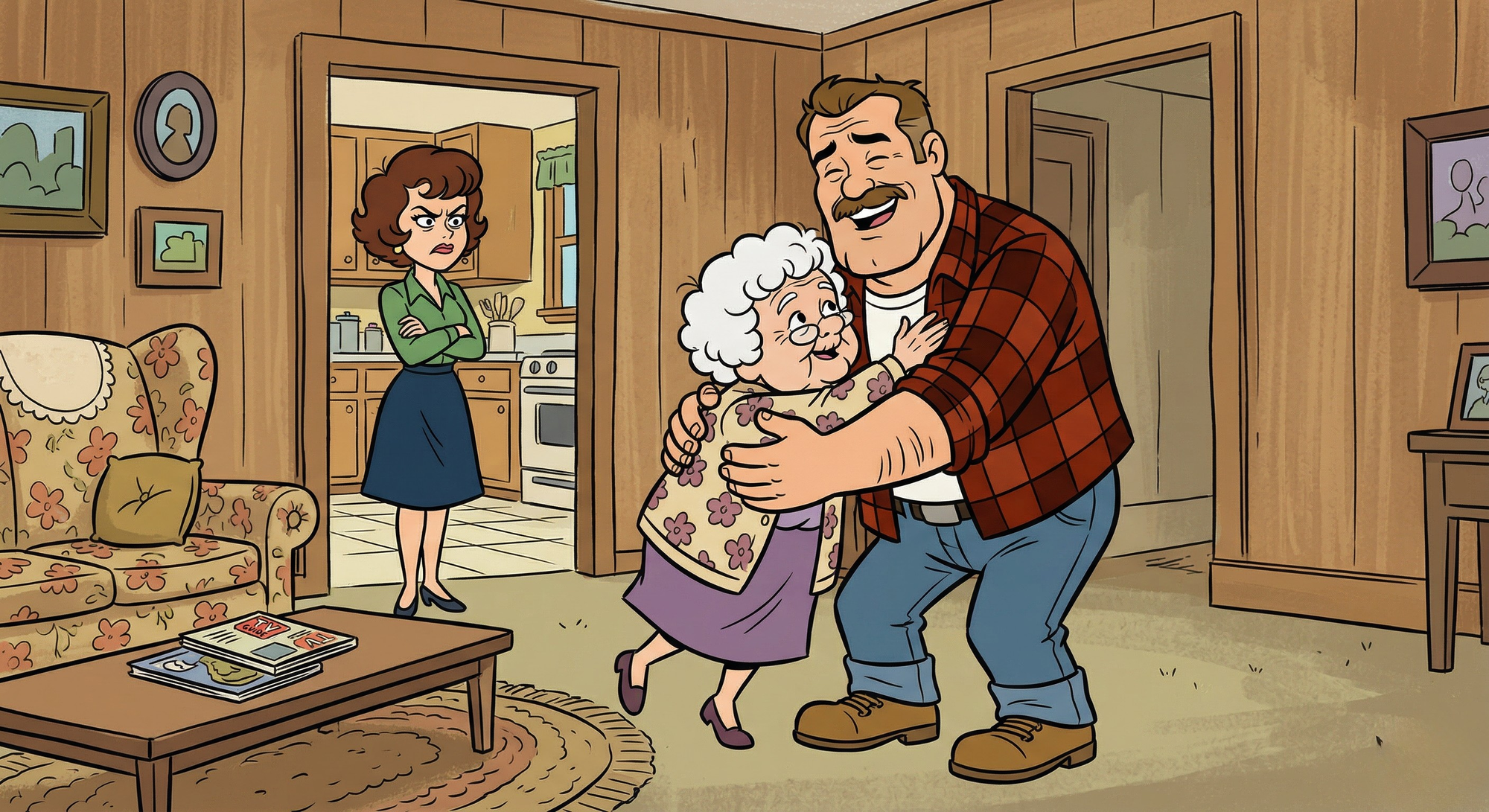
A post in the LDS Dating Midsingles group last week lit up the feed in a way that felt very familiar. A woman posted a pointed, plainly worded question: why are so many men hitting 40 still choosing their mothers over a potential wife? She cited scripture. She named the pattern directly. She ended with, essentially, grow up. The post pulled in 157 reactions and 268 comments before most people finished their morning routine.
The responses split almost perfectly into three camps. A lot of women recognized the frustration immediately and said so. Several men fired back with their own list of complaints about women, which is its own conversation. And a smaller group tried to pump the brakes and add some nuance, pointing out that some of these men are single adults caring for aging or widowed mothers, and that the situation is more complicated than it looks from the outside.
What's interesting is that all three groups were partially right. The frustration the original poster named is real. The complexity the pragmatists added is real. And yes, men are not alone in bringing unfinished family business into new relationships.
But underneath all of it, Scott and Laurie see something that the thread never quite got to. And that's the part worth talking about.
He Didn't Leave, and Neither Did She
Scott
The scripture the original poster quoted is one of the most practical pieces of relationship advice ever written. Leave your parents and cleave to your spouse. That's the sequence. Not honor your parents less. Not stop loving them. Leave first. Then cleave.
The problem for a lot of men in this community is that nobody actually taught them what "leaving" means. They moved out of the house. They served a mission. They got jobs. But emotionally? A lot of them are still checking in. Still managing mom's feelings. Still seeking approval before making a decision. Still picking up the phone every time she calls, no matter what is happening on the other end of the couch.
That's not a character flaw. It's a pattern, and most of the time the guy doesn't even know it's there. He just thinks he's a good son.
The honest truth is this: a man who has not done the internal work of becoming his own emotional authority is not actually available for a full partnership. He has one foot in the family he came from and one foot in the family he says he wants to build. And a woman standing at that altar is going to feel that divide for the rest of her marriage if she doesn't see it clearly now.
The original poster is not wrong to name it. She's right to take it seriously as a signal about availability.
Laurie
What I want to say to the women in this thread is that the frustration is completely understandable, but "grow up" is not a strategy. You cannot call a man into maturity from the outside. You can only notice where he is and decide what that means for you.
Here's what I'd encourage every woman who recognized herself in that post to sit with: the goal is not to find a man who loves his mother less. The goal is to find a man who has done the work of growing into himself. Those are very different things. A man who genuinely honors his parents from a place of strength and self-possession is actually wonderful partner material. A man who is still emotionally tangled up in managing a parent's feelings, seeking her approval, or letting her direct his choices, that man is simply not free yet.
The difference is not always obvious in the first few conversations. But it shows up in small moments. Watch how he talks about her. Watch what happens when her preferences and yours are in tension. Watch whether he can make a clear, adult decision without running it by her first. Those moments tell you everything.
What "Leaving" Actually Looks Like
Scott
I want to address the men in this community directly, because I think a lot of you are going to read that original post and feel accused of something you didn't intend.
Most men who show this pattern are not weak. They are often actually very caring people. They were raised in a culture that emphasized duty, family loyalty, and being a good son. Those are not bad values. But somewhere along the way, the healthy version of that (I love and respect my mother) got tangled up with something else (I cannot disappoint her, I cannot set limits with her, her emotional state is my responsibility).
Emotionally differentiating from your parents, which is just a clinical way of saying becoming your own person while still loving them, is one of the most important pieces of adult development. And it is one of the things that purity culture and close-knit religious communities sometimes make harder, not easier. When family approval and spiritual worthiness are closely linked, separating "what I actually think and want" from "what my family expects" can feel genuinely dangerous.
Doing that work is not disloyalty. It is what allows you to love your mother without being controlled by her. And it is what makes you available for the kind of partnership you actually want.
The "What About Women?" Moment
Laurie
A significant number of men in that thread responded to the original post by redirecting to women's shortcomings. Women who won't cook. Women with unrealistic standards. Women who are bitter. And I understand the impulse, I really do. When you feel criticized as a group, the reflex is to level the playing field.
But here is the thing worth sitting with: if your first response to someone naming a real pattern is to immediately point at the other gender, you are not engaging with the feedback. You are deflecting it.
The patterns the original poster described are real. The patterns those men named in response are also real. Both can be true at the same time. Neither side gets to use the other's flaws as a reason to avoid looking at their own.
In this community especially, we have all arrived at midlife carrying things we didn't fully choose. Patterns from the families we grew up in. Scripts about gender roles and marriage and what we are supposed to want. Wounds from relationships that didn't go the way the plan promised. None of that is shameful. But all of it is our responsibility to look at, because nobody else can do that work for us.
The woman who posted her frustration and the men who pushed back are actually dealing with the same underlying challenge: learning who they are as adults, separate from the scripts they were handed.
The Real Complexity (Because It's There)
Scott
One group of commenters in the thread brought up something I don't want to skip past. Some of these men are genuinely single adults caring for aging, widowed, or unwell mothers. That is real life. That is not immaturity. That is a season of significant responsibility that many midlife singles are navigating.
There is a meaningful difference between a man who is emotionally enmeshed with his mother and a man who is in a demanding caregiving situation. Both may look similar from the outside, particularly in the early stages of dating. But the internal experience, and the trajectory, are very different.
A man who is caregiving from a healthy, differentiated place can still be clear about his priorities, communicate openly about his constraints, and make real room for a partner. A man who is emotionally entangled with a parent will struggle to do any of those things regardless of the caregiving situation.
Ask questions. Slow down. Give the conversation some space before you decide. Not every man with a complicated family situation is unavailable. But you deserve to know what you are actually stepping into.
What You're Really Looking For
Laurie
If you walked away from that thread feeling seen but stuck, here is what I want to leave you with.
The question is not "does he love his mother." The question is "has he become his own person." Because that is what makes a man available for a real partnership. Not the absence of family loyalty, but the presence of self-possession.
And here is the mirror worth holding up for yourself as well. Have you left? Have you done the work of becoming your own emotional authority, of knowing what you actually want and value separate from what your family, your faith community, or your past relationships taught you to want? That work is not easier for women than it is for men. It is just a different shape.
What you are looking for in a partner, you also have to be building in yourself. A person who knows who they are and chooses from that place, rather than from fear or habit or the need for approval. That kind of person draws a very different kind of relationship toward them.
You are not looking for someone who will put you first in a competition with his mother. You are looking for a man who has done enough of his own growing that there is no competition at all.
And when you are ready to go deeper into that work, we will be here.
— Scott & Laurie
Weighing in from the lowest tier of the Celestial Kingdom, where we finally figured out that "leaving and cleaving" applies to both people, and the view is considerably better once you do.